Evaluating Watercolor Floral Wreath Clipart for Professional and Personal Design Projects
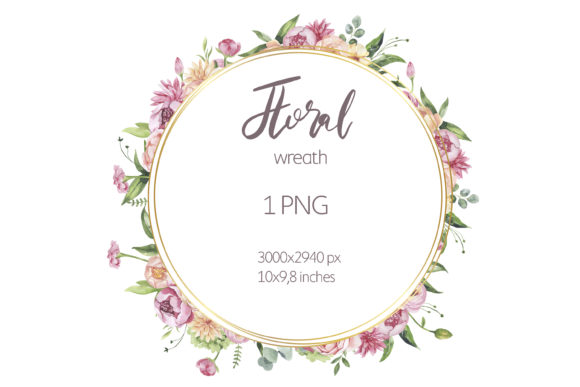
Watercolor floral wreath clipart occupies a specific niche in digital design, bridging the gap between traditional artistic aesthetics and modern digital convenience. Unlike vector graphics or hand-painted originals, this specific type of digital asset offers the organic texture and softness of watercolor media with the immediate usability of a pre-made file. For designers, crafters, and small business owners aged 20 to 50, understanding the technical specifications and practical applications of these assets is essential for making informed purchasing decisions. When evaluating a high-resolution PNG file at 300 DPI with dimensions of 3000x2940px, it is important to recognize both the creative freedom this format provides and the inherent limitations compared to other graphic resources.
Technical Specifications and Print Viability
The primary value proposition of premium watercolor floral wreath clipart lies in its resolution and transparency. A file size of 3000x2940px translates to approximately 10x9.8 inches at 300 DPI (dots per inch). This specification is the industry standard for high-quality print production. When comparing options, many lower-cost or free alternatives often max out at 72 DPI or offer smaller pixel dimensions, which results in pixelation when printed on greeting cards, posters, or packaging. The 300 DPI benchmark ensures that the delicate edges of the watercolor brushstrokes remain crisp and the color gradients do not band when transferred to physical media.
Transparency is equally critical. Receiving a single PNG file on a transparent background eliminates the need for post-processing removal tools. In professional workflows, time spent masking out white backgrounds from JPEG files is non-billable and prone to error, especially with the semi-transparent washes typical of watercolor art. A true transparent PNG preserves the subtle opacity variations in the paint, allowing the wreath to blend seamlessly over colored cardstock, textured paper, or digital layouts without harsh edges or halos. This technical distinction separates professional-grade clipart from hobbyist resources.
Comparing Raster Clipart to Vector Alternatives
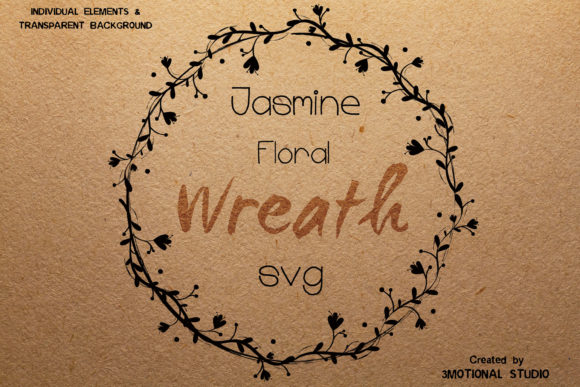
A common decision point for designers is choosing between raster watercolor clipart and vector illustrations. Vectors (SVG, EPS, AI) are mathematically defined, allowing for infinite scaling without quality loss. However, vectors struggle to replicate the authentic, unpredictable nature of watercolor pigment bleeding into paper. While some vector artists simulate this effect, the result often lacks the genuine depth and texture found in scanned or digitally painted raster watercolor floral wreath clipart.
If your project requires resizing the wreath from a 2-inch sticker to a 24-inch poster, vectors are superior. However, if the priority is aesthetic authenticity and emotional resonance, the raster PNG format is often the better fit. The fixed resolution of 3000x2940px is sufficient for most standard commercial applications, including wedding invitations, A4 posters, and apparel prints. Users must weigh the tradeoff: vectors offer scalability but may sacrifice organic realism, while high-res raster clipart offers superior texture within fixed dimensional boundaries.
Best-Fit Applications and Creative Use Cases
Understanding where watercolor floral wreath clipart performs best helps prevent buyer’s remorse. This asset category excels in projects requiring a focal point or frame that conveys warmth, elegance, or natural beauty. Common high-value applications include:
- Greeting Cards and Stationery: The 10x9.8 inch dimension fits perfectly within standard A4 or letter-sized layouts, serving as a central frame for typography or monograms.
- Digital Quotes and Social Media: At 300 DPI, these files can be scaled down significantly for Instagram or Pinterest without losing detail, ensuring the artwork looks sharp on high-density mobile screens.
- DIY Crafting and Sublimation: For makers using sublimation printers or vinyl cutters, the transparent background allows for precise placement on mugs, tumblers, and textiles without manual editing.
- Event Branding: Weddings, baby showers, and boutique product launches benefit from the cohesive, handcrafted look that ties together signage, menus, and digital invites.
In these scenarios, the pre-rendered nature of the clipart saves hours of illustration time while maintaining a bespoke appearance that stock photography cannot achieve.
Limitations and When to Seek Alternatives
Despite their versatility, watercolor floral wreath clipart files have distinct limitations that users must acknowledge. Because they are raster images, enlarging them beyond their native 3000x2940px resolution will degrade quality. If you are designing large-format signage, billboards, or vehicle wraps, this specific asset type is insufficient. In such cases, commissioning a custom large-scale painting or utilizing scalable vector art is necessary.
Additionally, customization is limited. Unlike layered PSD files or vector sources, a flattened PNG does not allow you to move individual flowers, change colors selectively, or adjust the composition. You receive exactly what is rendered. If your project requires matching specific brand colors or rearranging botanical elements to fit an unusual aspect ratio, a single-layer PNG may be too restrictive. Buyers needing extensive editability should prioritize layered source files over flat clipart, even if the initial cost is higher.
Another consideration is uniqueness. Since clipart is often sold to multiple users, there is a possibility of seeing the same wreath used elsewhere. For brands requiring exclusive visual identity, relying solely on popular clipart packs carries a risk of generic branding. Mitigating this involves integrating the wreath into a larger, unique composite design rather than using it as a standalone element.
Evaluating Quality Beyond Resolution
When comparing different watercolor floral wreath clipart options, resolution is only one metric. Equally important is the artistic integrity and scanning quality. High-quality assets exhibit consistent lighting, clean edges, and accurate color reproduction. Poorly processed clipart may show grayish tints in supposedly white areas, jagged aliasing on curved stems, or oversaturated colors that shift unpredictably during printing.
Before purchasing, examine preview images at full zoom. Look for smooth transitions in the watercolor washes and verify that the transparency is clean. Test prints are advisable for critical projects; screen colors (RGB) often differ from print output (CMYK), and watercolor textures can sometimes appear muddied if the original file was not properly color-profiled. Reputable sellers provide accurate previews and clear licensing terms, which is crucial for commercial users who need assurance that their use case is permitted.
Making an Informed Decision
Selecting the right watercolor floral wreath clipart ultimately depends on balancing project requirements with asset capabilities. For adults creating greeting cards, DIY crafts, quotes, or posters, a 3000x2940px PNG at 300 DPI represents a practical sweet spot. It delivers professional print quality and immediate usability without the steep learning curve of digital painting or the premium cost of custom illustration.
However, buyers should approach this resource with realistic expectations. It is a tool for efficiency and aesthetic enhancement, not a universal solution for every design challenge. By understanding the distinctions between raster and vector formats, recognizing resolution limits, and assessing editability needs, users can confidently integrate watercolor floral wreath clipart into their creative workflow. This balanced evaluation ensures that the chosen asset aligns with both artistic vision and technical demands, resulting in finished products that feel intentional and professionally executed.