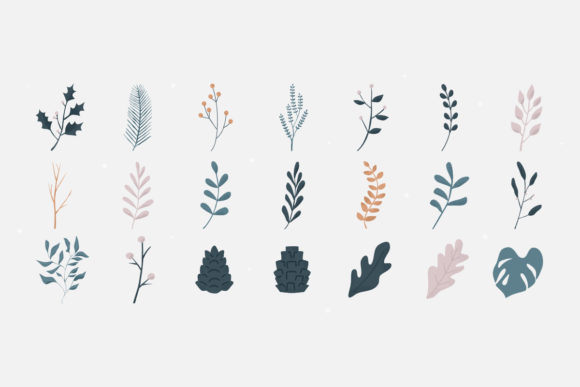
Winter Floral Decorative Foliage Flowers: Elevating Seasonal Design with Botanical Illustrations
When the temperature drops and daylight fades, visual design often shifts toward warmth, texture, and organic softness. Winter Floral Decorative Foliage Flowers represent a specific niche in digital asset libraries that bridges the gap between traditional holiday aesthetics and modern, minimalist design. Unlike generic Christmas clip art, this collection focuses on the delicate interplay of natural branches, leaves, berries, and cute pastel plants accented with snowflakes. It is a curated botanical illustration set designed for creators who need seasonal relevance without sacrificing sophistication or versatility.
This resource typically arrives as a ZIP file containing both EPS and JPG formats, a combination that serves distinct practical purposes. The JPG files offer immediate usability for social media managers and bloggers needing quick visuals, while the EPS vectors provide the scalability required by professional print designers and packaging artists. Understanding how to leverage these specific elements—herbs, branches, and soft floral arrangements—can transform a standard winter project into something that feels handcrafted and intentional.
Why Pastel Botanicals Work for Modern Winter Projects
Traditional winter imagery often relies heavily on saturated reds, deep greens, and metallic golds. While classic, these colors can feel repetitive or overly aggressive in certain contexts. The inclusion of cute pastel plants within a winter floral collection offers a necessary alternative. Soft pinks, muted blues, and creamy whites evoke the quiet stillness of snowfall rather than the commercial bustle of the holidays. This aesthetic is particularly valuable for brands and individuals targeting an audience that appreciates Scandinavian design, hygge lifestyles, or contemporary stationery trends.
For example, a wedding planner designing invitations for a December ceremony might find traditional holly too festive and distracting. Winter Floral Decorative Foliage Flowers with pastel tones allow for seasonal acknowledgment that remains romantic and elegant. Similarly, a skincare brand launching a "winter hydration" line can use these soft botanical illustrations to convey gentleness and natural care, avoiding the implication that the product is a novelty holiday gift. The visual language here communicates comfort and nature, making it applicable far beyond December 25th.
Practical Applications Across Creative Disciplines
The true value of this collection lies in its adaptability. Because the assets include isolated elements like individual berries, herb sprigs, and branch clusters, users are not locked into pre-composed layouts. This modularity supports a wide range of real-world scenarios.
Digital Content and Social Media Strategy
Content creators and social media managers face the constant challenge of maintaining engagement during the winter slump. High-quality botanical illustrations serve as excellent background textures or overlay elements for Instagram Stories, Pinterest pins, and blog headers. Instead of using stock photos that look identical to everyone else’s, a lifestyle blogger can layer a vector branch over a solid color background to create custom quote cards or announcement templates. The snowflake elements add seasonal context without requiring actual winter photography, which is especially useful for creators in warmer climates who still want to participate in global seasonal trends.
Print Design and Packaging
For small business owners selling physical goods, packaging is a primary touchpoint. The EPS format included in the ZIP file is essential here. Vector graphics can be scaled to fit anything from a tiny jewelry tag to a large shipping box without losing crispness. A candle maker might wrap the jar with a label featuring intricate leaf and berry patterns, while a tea company could use the herbal illustrations to highlight natural ingredients on their winter blend packaging. These decorative foliage flowers add perceived value to handmade products, signaling to customers that attention to detail extends from the product itself to its presentation.
Educational and Personal Crafting
Educators and homeschooling parents often seek non-religious, nature-focused materials for winter units. Botanical illustrations of herbs and branches provide scientifically accurate yet aesthetically pleasing visuals for biology worksheets, nature journals, or classroom decorations. Unlike cartoonish clip art, these illustrations respect the intelligence of the learner while remaining accessible. On a personal level, hobbyists using Cricut or Silhouette machines can utilize the vector files to cut vinyl decals for mugs, windows, or greeting cards. The separation of elements allows crafters to build their own unique wreaths or garlands digitally before cutting, ensuring their handmade items stand out at craft fairs or family gatherings.
Navigating File Formats: When to Use EPS vs. JPG
Understanding the technical delivery of Winter Floral Decorative Foliage Flowers ensures you get the best results for your specific medium. The ZIP file structure is designed for workflow efficiency, but choosing the wrong format can lead to frustration.
- JPG Files: Best for digital screens, web use, and quick mockups. These are raster images with fixed resolutions. They are ideal for inserting directly into Canva, Word documents, or social media scheduling tools. However, they cannot be resized significantly larger than their original dimensions without becoming pixelated.
- EPS Files: Essential for professional printing, large-format signage, and merchandise. As vector files, they are mathematically defined, meaning you can scale a single berry to the size of a billboard or shrink a full wreath to a business card without any loss of quality. You will need software like Adobe Illustrator, Affinity Designer, or Inkscape to edit these files effectively.
If you are a freelancer delivering work to a client, always keep the master EPS files. Even if the current project only requires a web-sized banner, having the vector source ensures you can easily adapt the design for future print campaigns without repurchasing assets.
Considerations Before Downloading and Implementing
While versatile, this type of decorative foliage isn't a universal solution. Before integrating these assets into your workflow, consider the following practical factors to ensure they align with your goals.
Licensing and Commercial Use: Always verify the specific license terms included in the ZIP file. Some collections allow for unlimited commercial end-products (like printed cards), while others may restrict usage to personal projects or require attribution. If you plan to sell digital templates featuring these flowers, check whether the license permits redistribution in editable form. Assuming rights can lead to legal issues later, so reading the fine print is a non-negotiable step for entrepreneurs.
Style Consistency: The "cute pastel" descriptor implies a specific mood. If your existing brand identity is dark, moody, or strictly corporate, introducing soft snowflakes and delicate herbs might create visual dissonance. Test the assets in a low-stakes environment first. Create a draft social post or a digital proof before committing to a full rebrand or print run. Sometimes, adjusting the opacity or applying a duotone filter to the JPGs can help bridge the gap between the asset's inherent style and your brand's established palette.
Composition Balance: Botanical illustrations are detailed by nature. When using Winter Floral Decorative Foliage Flowers, negative space becomes your most important tool. Overcrowding a design with too many branches, berries, and snowflakes can make text illegible and the overall composition feel chaotic. Use the elements to frame content rather than fill every corner. A single, well-placed herb sprig often communicates "winter" more effectively than a dense border of mixed foliage.
Maximizing Value Through Seasonal Flexibility
One of the strongest advantages of this collection is its longevity. While marketed as "winter," the core components—branches, leaves, herbs, and berries—are botanically relevant across multiple seasons. By simply removing or hiding the snowflake elements in the vector file, the same assets transition seamlessly into early spring or autumn designs. This makes the investment worthwhile for users who maintain year-round content calendars.
For marketers and publishers, this means you can develop a cohesive visual system that evolves with the calendar. The same branch structure used in a January newsletter can appear in a March gardening guide, creating subconscious brand recognition through consistent illustrative style. Ultimately, Winter Floral Decorative Foliage Flowers should be viewed not just as seasonal decoration, but as a foundational design toolkit. Whether you are crafting a heartfelt holiday card, branding a boutique product line, or teaching a lesson on plant biology, these natural elements provide the texture and authenticity that digital design often lacks. By selecting high-quality, multi-format assets and applying them with intention, you create work that resonates deeply with audiences seeking beauty and connection during the colder months.